info@harmanismed.gr


Defibrillators and peripherals
Defibrillators
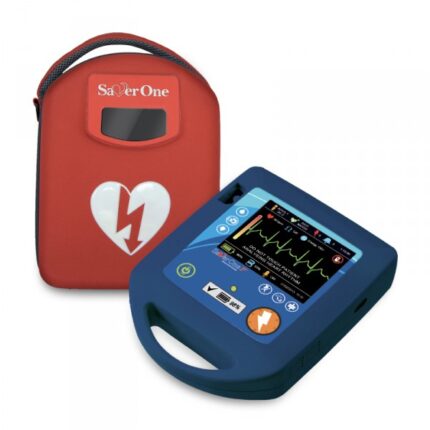
Automatic – semi-automatic defibrillators with instructions for rescuing patients in emergencies. An automatic external defibrillator (AED) is a portable electronic device that automatically recognizes life-threatening ventricular fibrillation (VF) cardiac arrhythmias and pulsed ventricular tachycardia and is able to treat them through defibrillation, allowing the heart to restore an efficient rhythm.
With simple auditory and visual commands, AEDs are designed to be simple to use for the user, and the use of AEDs is taught in many first aid, rescue training, and basic cardiopulmonary resuscitation (CPR) courses. [2]
An automated external defibrillator requires minimal training to use. It automatically recognizes the heart rate and determines whether shock is required. Automatic models will manage shock without the user’s command. Semi-automatic models will inform the user that shock is required, but the user must inform the machine about it, usually by pressing a button. In most cases, the user cannot override a “no shock” tip from an AED. Some AEDs can be used on children – people under 55 kg (25 kg) in weight or under 8 years old with the appropriate pads.